
OGS: I am planning to plant some crops for fall and winter. How should I schedule my sowing?
Thanks,
Perplexed
———
Dear Perplexed,
Fall is a great time for vegetable growing, but many feel too burned out by the weeds and heat in July and August when the planning and planting are needed. In September, a prime window for most crops starts to close. Fall crops tend to be sweeter in general, and weeds are less of a problem. The author theorizes that plant sugars act as a natural “antifreeze.” It’s commendable that the reader is extending their gardening season into fall and winter.
A simple scheduling approach is to determine the days to maturity for each crop and count back from the desired harvest date. Most seed catalogs estimate the time from sowing (or transplanting) to harvest. For example, the Johnny’s Selected Seeds catalog offers this information and specifies whether it applies to transplants or direct sowing. It is advisable to back up a month to six weeks if the reader is growing their own transplants and to add a week or several weeks, depending on the shortening days at harvest time.
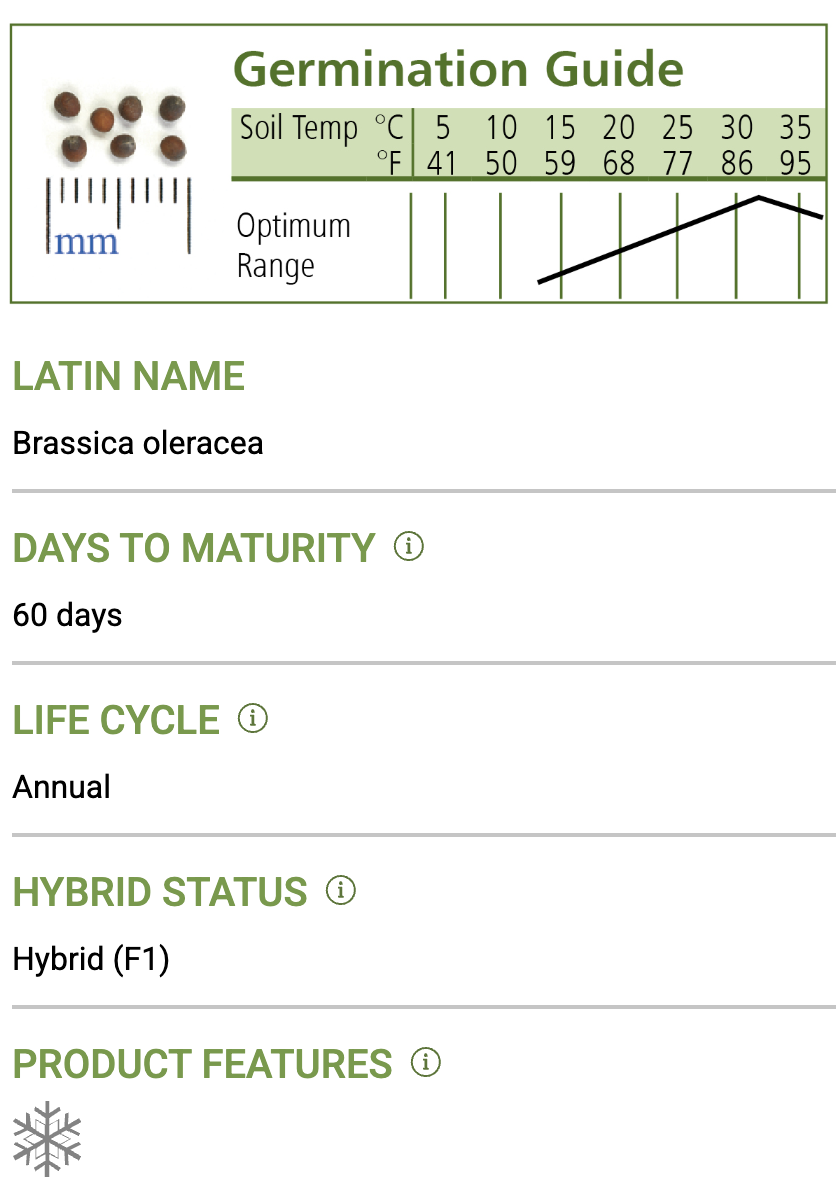
Example of the snowflake symbol within product information, sourced from the Johnny’s Selected Seeds website.
A more complicated answer would involve considering crop variety, hardiness, microclimate, and the type of protection intended for use. Day length and average daily temperatures also play a role in fall scheduling. Another factor is how well each crop tolerates cool conditions. For instance, miner’s lettuce struggles in summer and typically stops growing after early June, but in winter it can freeze solid, thaw out, and double in size shortly thereafter. In contrast, basil will turn black at the mere hint of frost.
Agronomists classify plants into three categories—hardy, half-hardy, and not hardy—indicating their resistance to frost. Most gardening books list varieties under these headings. The Johnny’s catalog uses a snowflake symbol to indicate varieties that are particularly winter hardy. Even within a specific crop type like arugula, some varieties are more hardy than others. For example, Sylvetta “wild” arugula has proven hardy during winter months.
Protection for crops can take various forms, including:
No protection
Row cover
Cold frame
Heated greenhouse
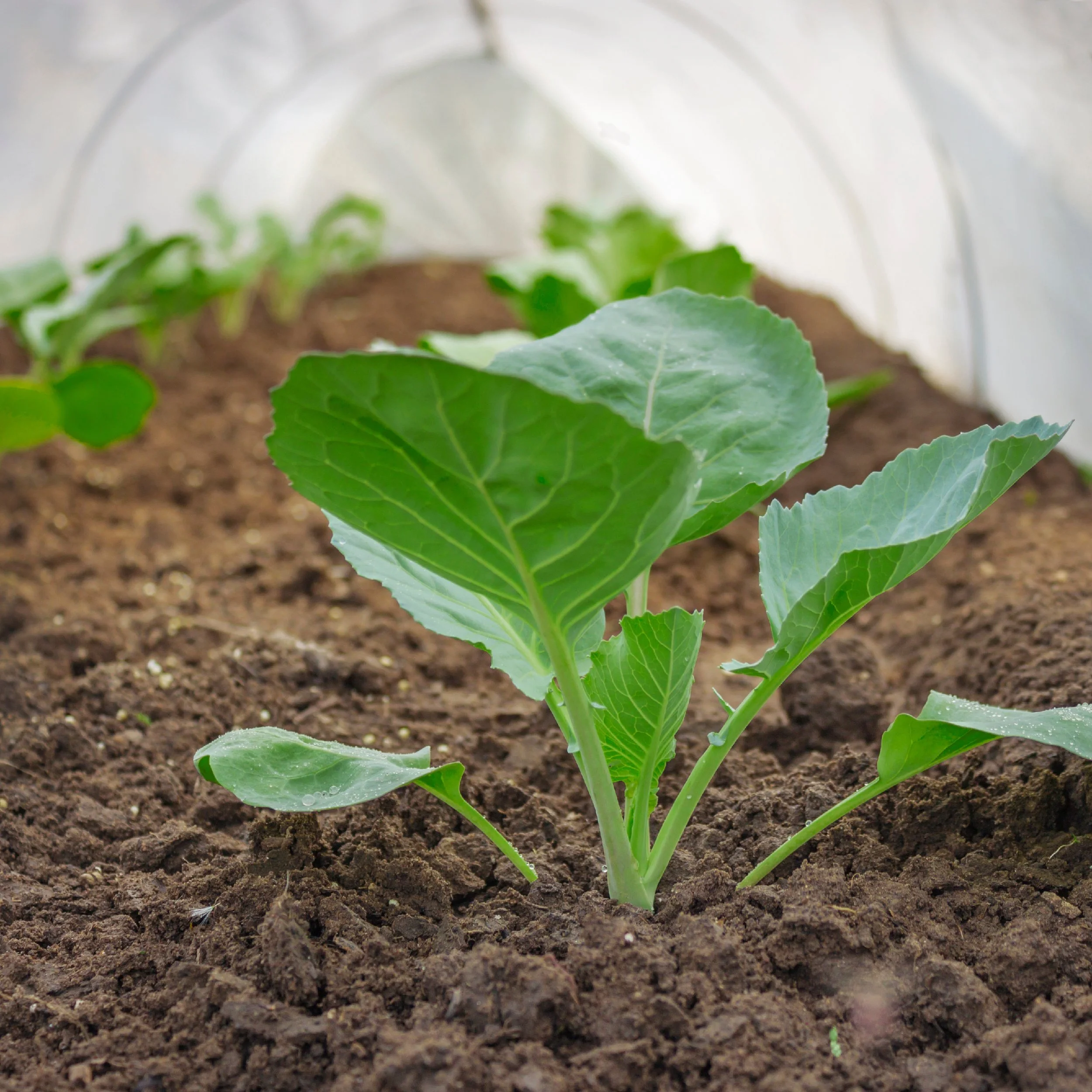
Young cabbage plants under a row cover
Another consideration is the garden site and protection plans. In Asheville, for instance, the frost date is around October 15, although it may occur sooner on the peaks or later in lower areas. Watching for the first frost can help identify “frost pockets,” or cooler spots, in the garden. For example, cool air drains off the north side of Spivey Mountain, leaving streaks of frost in the lowest areas while hill slopes may be spared. South-facing land is favorable for warmth in both fall and spring; structures can reflect sunlight on their south side and create permafrost on their north side, so it’s important to select a beneficial microclimate for winter gardening.
The primary goals of row covers and cold frames are to prevent crops from drying out in cold, dry winds and to help them warm more gradually as sunlight increases after a cold night. The combination of row covers inside walk-in cold frames has been particularly effective for the author.
Thus, answering the reader’s question is complex. The best information comes from one’s own experiences, so keeping good notes is essential. In ten years or so, a grower should have a clearer understanding of when to sow a variety of crops. The following are general guidelines for gardening at an elevation of around 2,000 feet, similar to what one might find in Asheville:
Heated greenhouse: Sow tomatoes in June for a fall harvest and in November for an early spring harvest.
Cold frame: Sow winter greens in late August or early September to transplant as soon as the summer crops are harvested.
Row cover: Direct sow short season crops in September and transplant as late as early October.
No protection: Stop sowing head lettuce by August 15, but salad mix can be sown a few weeks later.
Space is limited, but Eliot Coleman’s book, The Winter Harvest Handbook(Chelsea Green, 2009), is excellent on this topic and is available at local bookstores or through Growing for Market. It's worth noting that he is situated in Maine, where they receive less sunlight earlier in the season than Asheville does.
Wishing warmth and good health this winter!
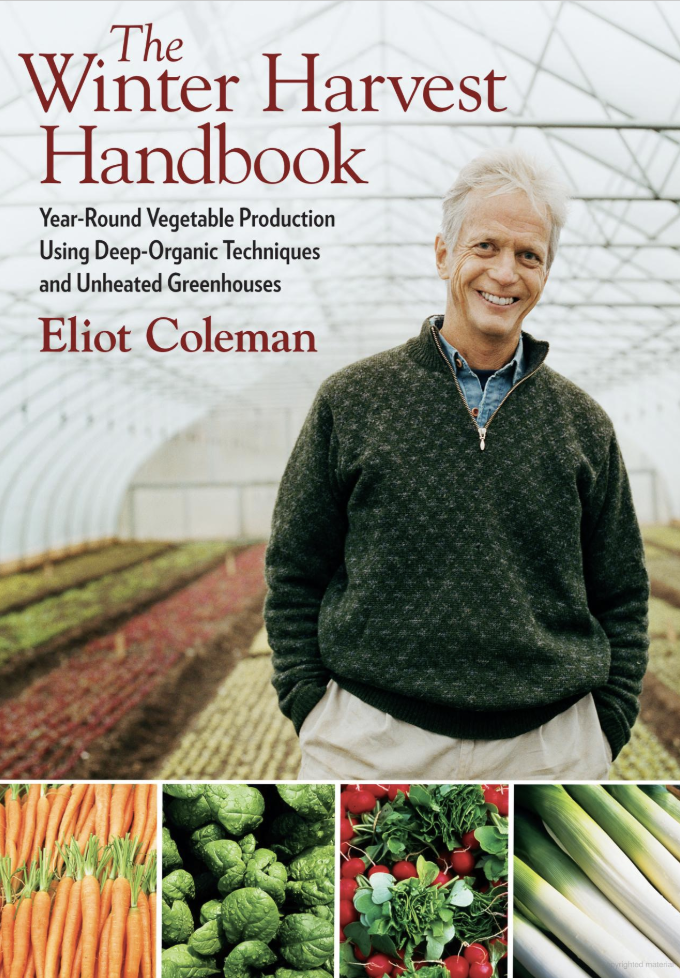
Cover image sourced from Chelsea Green Publishing website
This blog post, written and copyrighted by Tom Elmore, was originally published as part of a previous Organic Growers School article series called "Ask Tom," which addressed the growing concern. Some updates may have been made by OGS staff to keep the content current.