
How to Garden During Drought Without Watering Constantly
Even in areas that normally get a lot of rain, gardeners in WNC are noticing longer dry spells, hotter springs and summers, and lots of unpredictable weather. Droughts have always happened, but now they occur at different times, last longer, and feel more intense.
The good news is that healthy gardens don’t depend on constant watering. In fact, the strongest gardens often receive less water and focus more on helping the soil retain moisture longer.
As most participants and friends of OGS will already know, recent soil and climate research continues to point to the same conclusion: improving soil health and reducing evaporation are among the most effective ways to build drought resilience in gardens and farms (Science of the Total Environment, 2025).
Build Soil That Holds Water
A common mistake in drought gardening is thinking that success depends only on how much water you use. In reality, soil quality is just as important, and sometimes it matters even more.
Research published in 2025 shows that soil degradation and low organic matter reduce moisture retention, making gardens more vulnerable to heat stress and erosion. Increasing the soil’s organic matter improves water-holding capacity, root health, and overall resilience during extreme weather (Science of the Total Environment, 2025).

Adding compost is one of the easiest ways to improve soil over time. Organic matter works almost like a sponge in the soil:
Sandy soils retain moisture longer.
Compacted soils loosen and absorb water more effectively.
Roots can grow deeper where moisture remains available longer.
University of California gardening guidance also says that compost improves both water retention and root access to deeper moisture reserves (University of California Agriculture & Natural Resources).
Mulch More Than You Think You Need
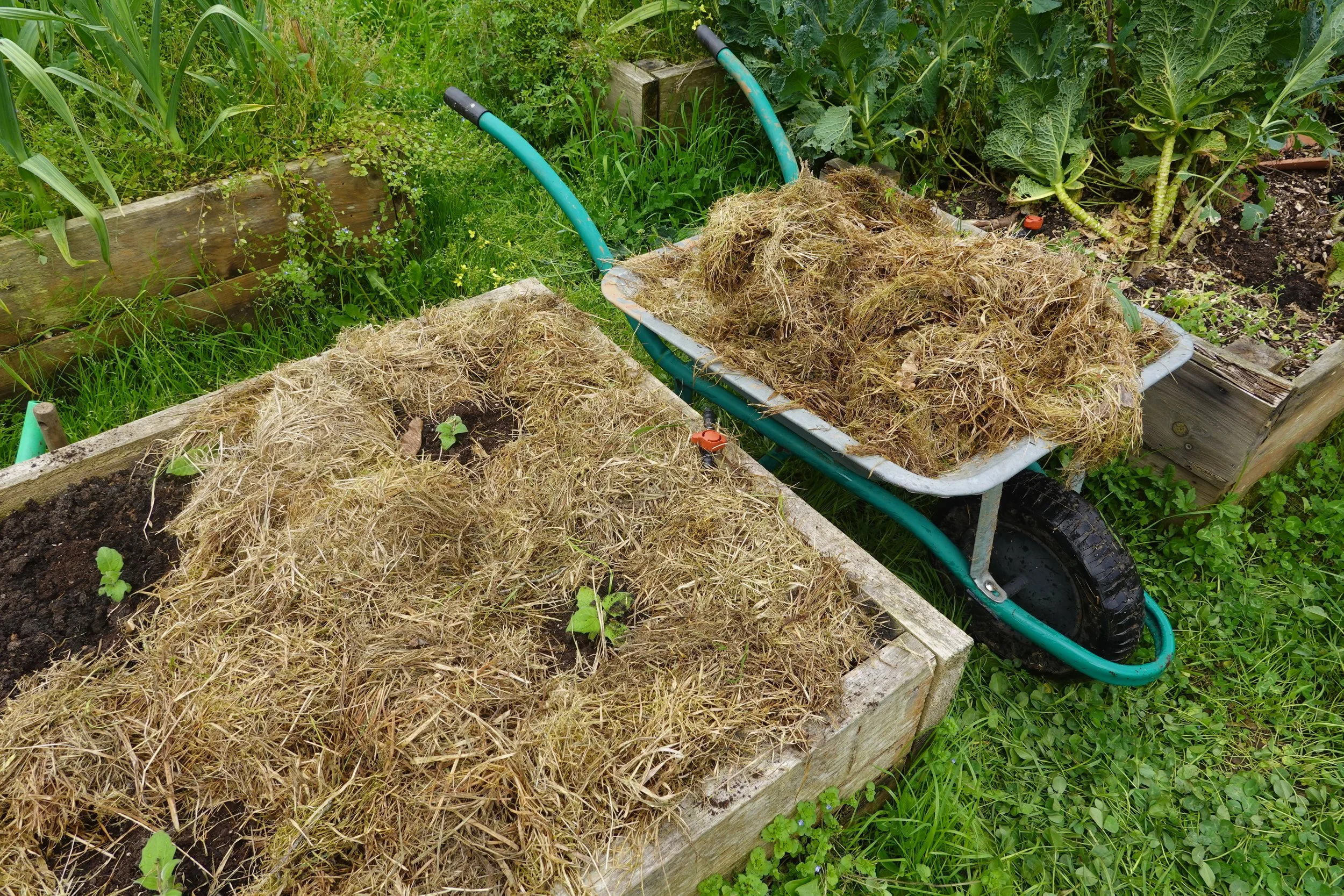
Mulch is one of the most useful but often overlooked tools for home gardeners dealing with drought.
Studies keep showing that mulching significantly reduces evaporation and helps keep soil temperatures steady during the dry heat (Cogent Food & Agriculture, 2025).
If you don’t use mulch, the summer sun can quickly dry out the soil, making water evaporate before plant roots can take it in.
Organic mulches likestraw, shredded leaves, untreated wood chips, pine needles, or partially finished compost, all of which help slow down moisture loss and feed the soil as they break down.
UC gardening recommendations suggest applying 3–4 inches of mulch around established plants to reduce evaporation and suppress weeds competing for water (University of California Agriculture & Natural Resources).
Water Deeper & Less Often
What many home gardeners don’t realize is that watering lightly and often leads to shallow roots, and these plants will be the first to struggle during a drought.
Instead of watering a little every day, try watering less often but more deeply. This helps plants grow stronger roots that reach water deeper in the soil.
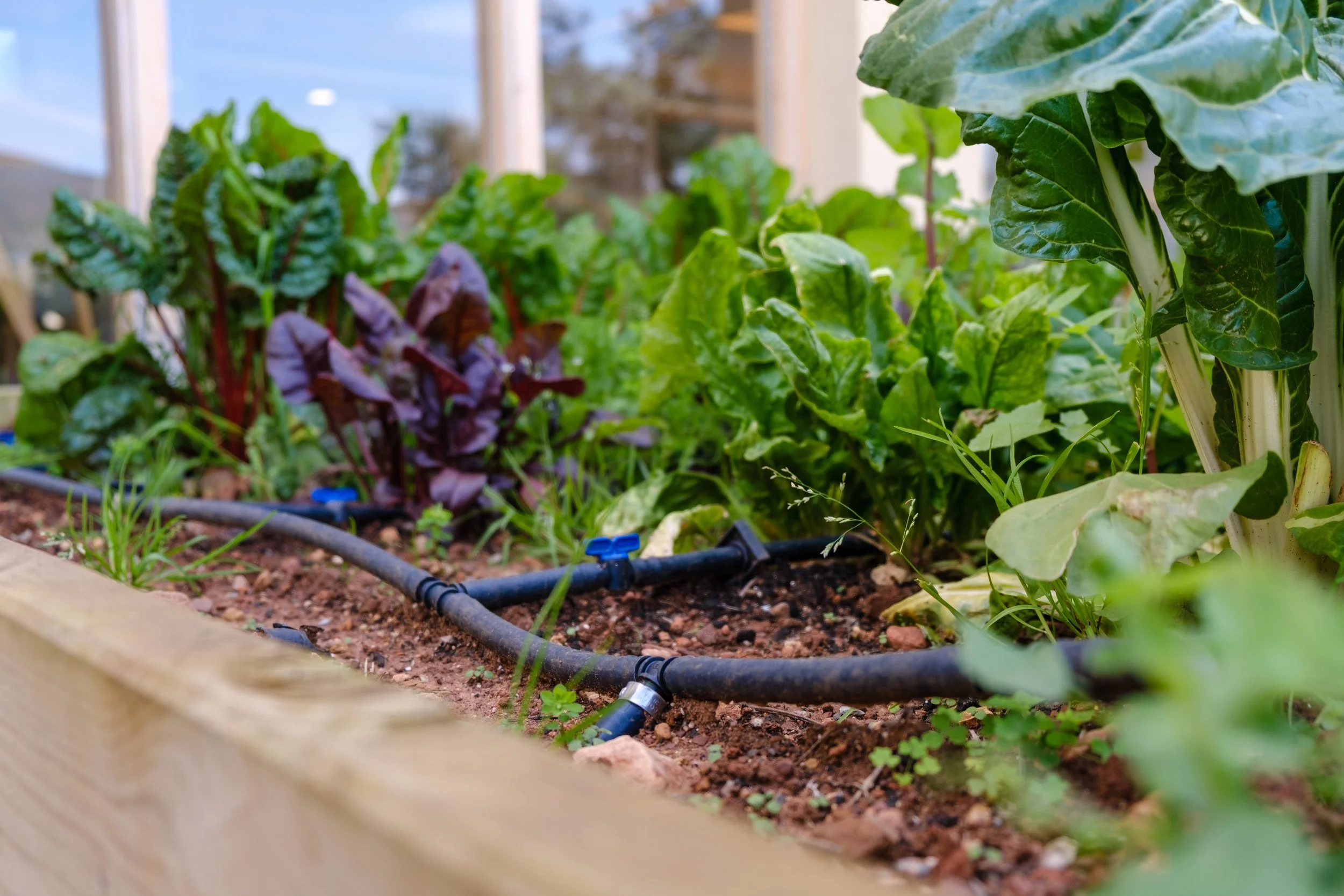
Drip irrigation and slow-soaking methods are consistently recommended by Extension and soil researchers because they reduce evaporation, minimize runoff, and deliver water closer to the root zone (University of Nevada, Reno Extension).
A morning soak also reduces moisture loss compared to midday watering at peak temperatures (University of Nevada, Reno Extension).
Reduce Stress on the Garden
During a drought, gardening is less about making plants grow as much as possible and more about helping them handle stress.
Here are a few ways to help gardens cope with heat and dryness:
Avoid heavy pruning during extreme heat.
Provide afternoon shade for sensitive plants.
Space plants appropriately to reduce competition.
Keep soil covered as much as possible.
Researchers studying agroecological and regenerative systems continue to find that diversified gardens with healthier soils tend to withstand drought better than simplified systems with exposed soil and low organic matter (Frontiers in Agronomy, 2025).
Choose Resilience Over Perfection
One of the toughest things about dry summers is learning to accept that your garden might not always look perfect.
Leaves will wilt. Growth can slow. Some plants struggle.
It’s important to remember that resilient gardening isn’t about keeping everything green no matter what. It’s about building a garden that can recover, adapt, and keep growing even when the weather isn’t cooperating.
Healthy soil, mulch, a mix of plants, and careful watering might not get rid of drought stress completely, but together they can make your garden much less dependent on mornings with the hose.